For pool operators, facility managers and home owners across Australia, fast, repeatable water checks are the difference between a safe swim and a health or maintenance problem. Whether you’re monitoring free chlorine after a heavy bather load, verifying drinking-water safety, or spot-checking natural water around a property, Insta-TEST® strips from LaMotte Pacific give you fast answers you can act on.
Insta-TEST Strips Explained: Pool Chlorine Test Kit Australia Guide
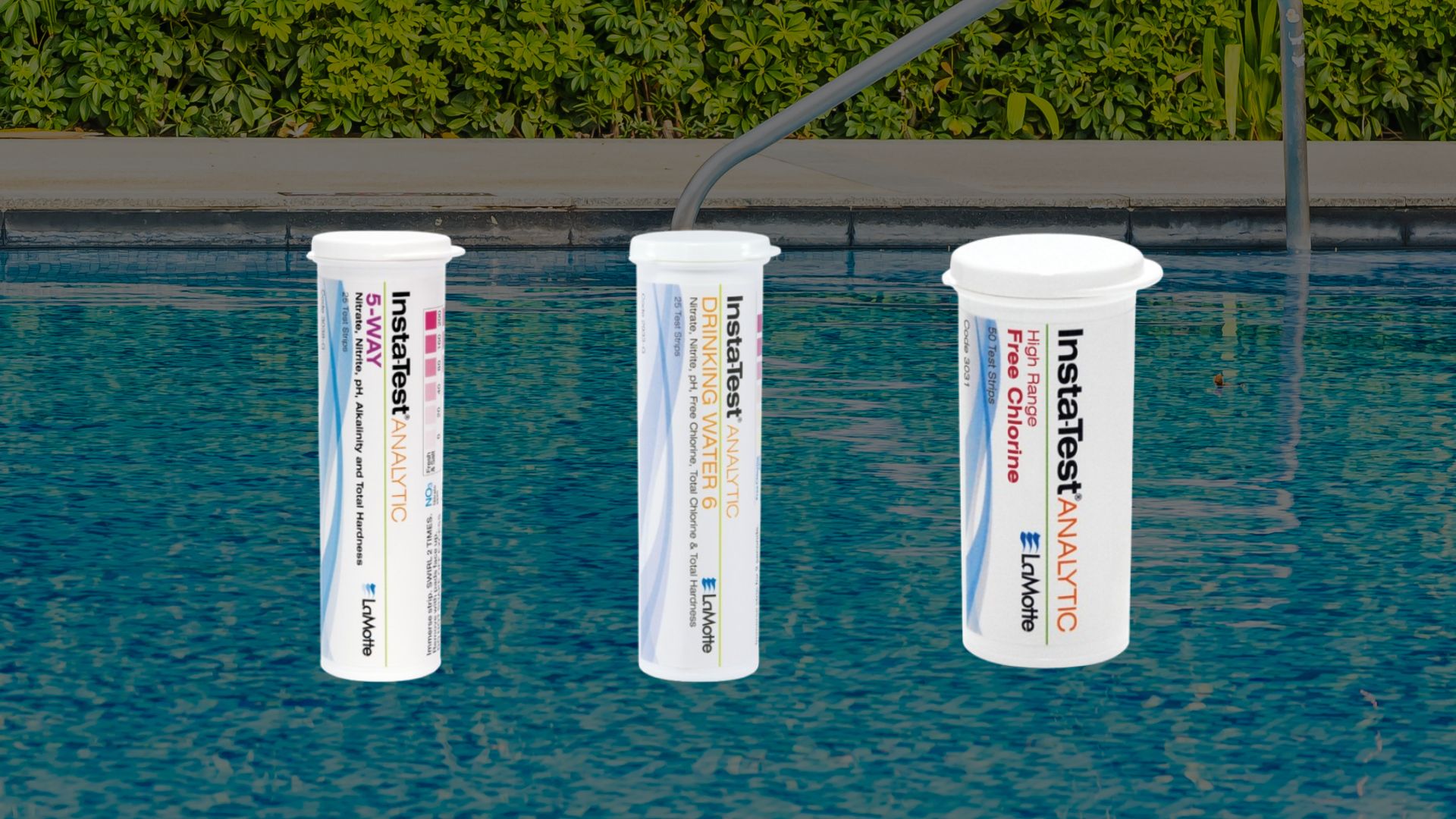
Insta-TEST 5-Way (Fresh & Salt) — designed for natural waters, aquaria and fish ponds; measures nitrate, nitrite, pH, alkalinity and total hardness. Ideal for coastal property managers, environmental checks and quick freshwater/saltwater comparisons.
Insta-TEST 6-Way Drinking Water — single-dip test for free chlorine, total chlorine, pH, hardness, nitrate and nitrite. Targets municipal and well water screening where drinking-water safety is required. Results in under a minute.
Insta-TEST Chlorine (High Range) — visual strips for high-range free chlorine measurement (ranges up to hundreds of ppm), useful for shock dosing, food-processing or industrial sanitising checks. Typical ranges include 0, 50, 100, 250, 500, 800 ppm — an essential choice for professionals seeking a reliable pool chlorine test kit Australia for rapid and accurate chlorine verification.
Each product is compact, ruggedly packaged with a colour chart, and designed for fast field use—perfect as a frontline element of any pool water test kit, Australia or site water-safety toolbox.
Why quick strips still matter in a data-driven program
A modern water-management workflow uses different tools for different purposes:
Strips for rapid, frequent spot-checks (daily or multiple times per day for high usage pools). They are low-cost and immediate.
Titration/DPD kits or colourimeters for confirmatory, regulatory or precise dosing decisions.
Digital analysers/labs for compliance reporting or when narrow tolerances are required.
Test strips give early warning: a drift in free chlorine, a pH swing, or a nutrient spike can be detected quickly so corrective actions (dosing, backwash, shock, or further lab tests) can follow. Remember: strips are excellent for screening, but some parameters (e.g., very low chlorine, exact combined-chlorine levels or regulatory reporting) require physico-chemical methods such as DPD titration or digital instruments.
Practical, data-driven best practice for Australian pools
Daily spot checks — For most pools, check free chlorine and pH at least once daily and after peak bather periods. Aim for free chlorine in the guideline band (commonly 1–3 mg/L for many pools; public and special-use pools may require different setpoints). Use strips for quick checks and follow up with DPD/colourimeter if results are borderline, or verify with a pool water analyzer Australia when higher precision is required.
Use the right strip for the job — Use the 6-Way Drinking Water strips to quickly validate municipal supply or well-water free/total chlorine. Use the high-range chlorine strips when you’re checking shock levels or verifying equipment that doses very high chlorine concentrations (e.g., bleaching/food-processing applications). These complement professional pool water testing equipment in Australia for accurate auditing and troubleshooting.
Record results and trends — Even simple numeric logs from strips help spot trends (slow pH drift, rising combined chlorine, recurring nitrate spikes). Trend data informs better dosing and can reduce chemical costs. Digital transfers are easy if you use a phone camera + spreadsheet to log strip readings. (Pro tip: photograph the strip next to the chart for later verification.) Trend tracking is especially important for swimming pool water testing in Australia, where environmental changes drive seasonal chemistry fluctuations.
Understand limitations — Strips are subject to interpretation error (colour matching), storage humidity and reagent shelf-life. Always keep the bottle sealed and the desiccant liner intact. For any regulatory exceedance or unexplained health complaints, escalate to a quantitative lab method.
Reading tips to improve accuracy
Dip and remove in one smooth motion, wait the time indicated (usually 15–60 seconds), then compare to the colour chart under good light.
Avoid contaminating strips—do not touch the pads.
Store in a cool, dry place; replace the cap immediately.
For borderline readings, run a confirmatory DPD test or DC1500-style colourimeter to get a numeric result.
Use cases: who benefits most?
Residential pool owners who want fast daily reassurance of chlorine and pH.
Swim schools & community pools for quick pre-session checks.
Facilities managers who need rapid checks before events.
Field operators and environmental monitors who need multi-parameter snapshots of natural or drinking water.
Food, beverage and industrial teams that need high-range chlorine spot checks during sanitation cycles.
Strips are the first line of defence
Insta-TEST strips are not a replacement for laboratory or digital instrumentation, but they are indispensable as the first line of defence: cheap, fast, easy to use, and capable of preventing small issues from becoming big problems. For any Australian pool program or water-safety regime, pairing Insta-TEST 5-Way, 6-Way Drinking Water, and High-Range Chlorine strips with confirmatory tools creates an efficient, data-driven approach to safer, clearer water.
For Further Enquiry Contact: sales@lamottepacific.com